
Finding good sound business advice these days is hard. We live in a time where no matter what you believe, you can find information to support it. Whether it is right or wrong, we suffer from information overload. How to know what is right? I suggest you test all the information you receive, even the information from this blog. Another way to find what is the truth is to use common sense. There is a saying that common sense isn’t common, and it’s true. If people use common sense, it would be easy to avoid deception. These books give you a different perspective on life, money, and business. If you are an aspiring entrepreneur or a new business owner, you should read these five books. You can find them on Amazon, Abe Books, Thrift Books, Book Outlet, eBay, and other online bookstores.
*As an Amazon Associate, I earn from qualifying purchases.
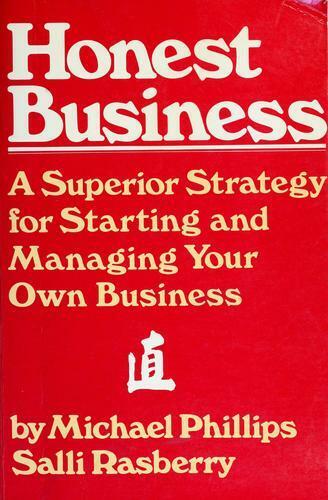
Honest Business: A Superior Strategy for Starting and Managing Your Own Business by Michael Phillips and Salli Rasberry
Synopsis:
Openness, community, and extensive access to information are stressed in this guide to honest business that discusses such topics as trade skill, management, and capital
About the Author:
Michael Phillips is a business consultant and author of The Seven Laws of Money and Gods of Commerce. Salli Rasberry is the author of five books including Marketing Without Advertising.
Review:
“The bible for starting and growing an honest business.”—Paul Hawken
“A practical and inspiring book for anyone with integrity who wants to enjoy work and make a fair profit while providing useful products and services. I highly recommend it.”—Michael Maccoby, John F. Kennedy School of Government, Harvard University
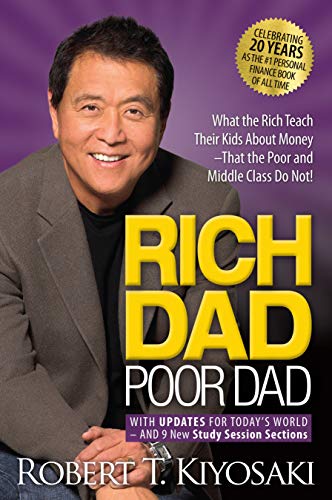
Rich Dad Poor Dad: What the Rich Teach Their Kids About Money That the Poor and Middle Class Do Not! by Robert Kiyosaki
Synopsis:
April 2017 marks 20 years since Robert Kiyosaki’s Rich Dad Poor Dad first made waves in the Personal Finance arena.
It has since become the #1 Personal Finance book of all time… translated into dozens of languages and sold around the world.
Rich Dad Poor Dad is Robert’s story of growing up with two dads his real father and the father of his best friend, his rich dad and the ways in which both men shaped his thoughts about money and investing. The book explodes the myth that you need to earn a high income to be rich and explains the difference between working for money and having your money work for you.
20 Years… 20/20 Hindsight
In the 20th Anniversary Edition of this classic, Robert offers an update on what we’ve seen over the past 20 years related to money, investing, and the global economy. Sidebars throughout the book will take readers fast forward” from 1997 to today as Robert assesses how the principles taught by his rich dad have stood the test of time.
In many ways, the messages of Rich Dad Poor Dad, messages that were criticized and challenged two decades ago, are more meaningful, relevant and important today than they were 20 years ago.
As always, readers can expect that Robert will be candid, insightful… and continue to rock more than a few boats in his retrospective.
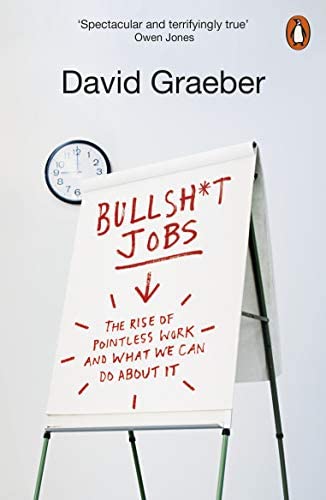
Bullshit Jobs by David Graeber
Synopsis:
37% people in the UK believe their jobs don’t make a meaningful contribution to the world There is something very wrong with what we have made ourselves.
We have become a civilisation based on work—not even “productive work” but work as an end and meaning in itself. We have come to believe that men and women who do not work harder than they wish at jobs they do not particularly enjoy are bad people unworthy of love, care, or assistance from their communities. The main political reaction to our awareness that half the time we are engaged in utterly meaningless or even counterproductive activities is to rankle with resentment over the fact there might be others out there who are not in the same trap. As a result, hatred, resentment, and suspicion have become the glue that holds society together.
This is a disastrous state of affairs. I wish it to end. If this book can in any way contribute to that end, it will have been worth writing.’
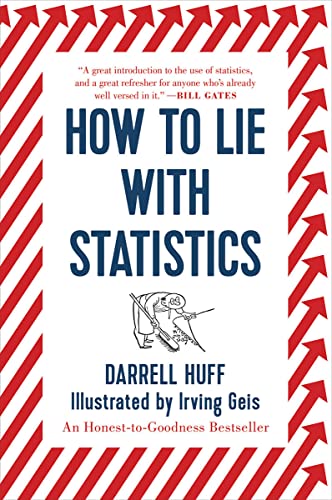
How to Lie with Statistics by Darrell Huff, Irving Geis [Illustrator]
Synopsis:
Over Half a Million Copies Sold–an Honest-to-Goodness Bestseller Darrell Huff runs the gamut of every popularly used type of statistic, probes such things as the sample study, the tabulation method, the interview technique, or the way the results are derived from the figures, and points up the countless number of dodges which are used to full rather than to inform.
Review: “There is terror in numbers,” writes Darrell Huff in How to Lie with Statistics. And nowhere does this terror translate to blind acceptance of authority more than in the slippery world of averages, correlations, graphs, and trends. Huff sought to break through “the daze that follows the collision of statistics with the human mind” with this slim volume, first published in 1954. The book remains relevant as a wake-up call for people unaccustomed to examining the endless flow of numbers pouring from Wall Street, Madison Avenue, and everywhere else someone has an axe to grind, a point to prove, or a product to sell. “The secret language of statistics, so appealing in a fact-minded culture, is employed to sensationalize, inflate, confuse, and oversimplify,” warns Huff.
Although many of the examples used in the book are charmingly dated, the cautions are timeless. Statistics are rife with opportunities for misuse, from “gee-whiz graphs” that add nonexistent drama to trends, to “results” detached from their method and meaning, to statistics’ ultimate bugaboo–faulty cause-and-effect reasoning. Huff’s tone is tolerant and amused, but no-nonsense. Like a lecturing father, he expects you to learn something useful from the book, and start applying it every day. Never be a sucker again, he cries!
Even if you can’t find a source of demonstrable bias, allow yourself some degree of skepticism about the results as long as there is a possibility of bias somewhere. There always is.
Read How to Lie with Statistics. Whether you encounter statistics at work, at school, or in advertising, you’ll remember its simple lessons. Don’t be terrorized by numbers, Huff implores. “The fact is that, despite its mathematical base, statistics is as much an art as it is a science.” –Therese Littleton
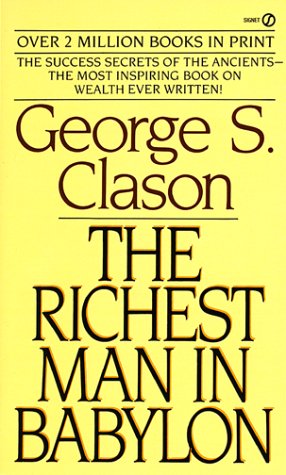
The Richest Man in Babylon by George Samuel Clason
Synopsis:
This book holds the secrets to acquiring money, keeping money, and making money earn more money.
About the Author:
George Samuel Clason was born in Louisiana, Missouri, on November 7th, 1874. He attended the University of Nebraska and served in the United States Army during the Spanish-American War. A successful businessman, he founded the Clason Map Company of Denver, Colorado and published the first road atlas of the United States and Canada. In 1926, he issued the first of a famous series of pamphlets on thrift and financial success, using parables set in ancient Babylon to make each of his points. These were distributed in large quantities by banks and insurance companies and became familiar to millions, the most famous being “The Richest Man in Babylon,” the parable from which the present volume takes its title. These “Babylonian parables” have become a modern inspirational classic.
Are you finding the tips helpful? Click the link to support the blog and keep helpful content coming your way.

 What's Trending Sage