
As an entrepreneur, I’ve owned both service-based and product-based businesses, and I can tell you firsthand—these two business models are entirely different. Neither is necessarily better than the other, but they require completely different approaches.
If you’re thinking about starting a product-based business, there are some key things you should know. Many strategies that work for selling services won’t translate well to selling physical products. Building awareness and gaining traction in the marketplace takes time, and expecting rapid sales growth within the first three to nine months is unrealistic. Unlike service-based businesses, where you can often start generating revenue quickly, product-based businesses require more upfront investment, testing, and patience before seeing consistent returns.
To help you navigate the world of product-based business, I’ve put together a list of must-read books. These books cover everything from consumer packaged goods (CPG), manufacturing to sourcing, pricing, wholesale, branding, product design, shipping and fulfillment, sales, marketing, advertising, social media, and R&D. Whether you are just starting or looking to refine your strategy, these books will give you the knowledge you need to grow a successful product-based brand.
*As an Amazon Associate, I earn from qualifying purchases.
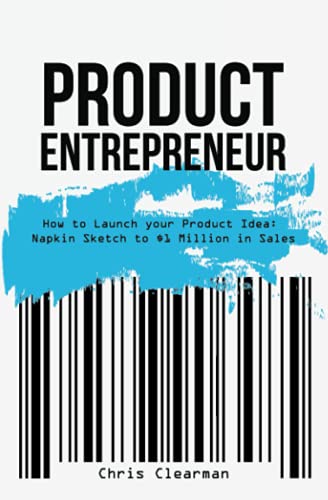
Product Entrepreneur: How to Launch your Product Idea: Napkin Sketch to $1 Million in Sales by Chris Clearman
Synopsis:
Successful product entrepreneur Chris Clearman compiles years of hard-won knowledge and experience in this practical guide to launch and grow your product business. This book covers the entire process from vetting your ideas to perfecting your pitch to retail buyers, and everything in between.
Topics covered include:
-Vetting ideas and picking out the winners through market research
-Designing your product and brand to sell
-Registering and operating a product-based business
-Financing your product business
-Prototyping, product development, sourcing, and manufacturing; how to make it happen
-The logistics of moving product around the world
-Building your ecommerce website
-Marketing and digital advertising to drive sales
-Getting your product on store shelves
-Specific resources, recommendations, and services to build and grow your business
-And so much more
If you’re just looking for an entertaining read, this book probably isn’t for you. Packed with useful information and nitty-gritty details you can’t find elsewhere, this book is solely focused on helping the aspiring product entrepreneur make their dream a reality.
Product Entrepreneur offers a step-by-step guide to take your product idea from a simple napkin sketch through your first $1 million in sales. The recipe is here – just add work ethic.
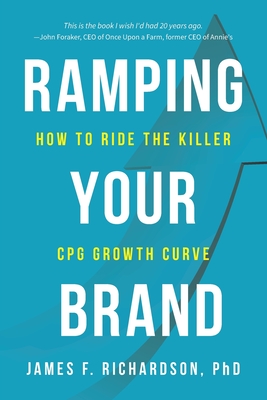
Ramping Your Brand: How to Ride the Killer CPG Growth Curve by James F. Richardson, Phd
Synopsis:
In this book, Dr. Richardson outlines a 4-Part approach to thinking smarter about growth as a CPG entrepreneur. It is based on years of anthropological research into how and why consumers pay for premium-priced CPG items and intensive 4P pattern analysis among an elite club of premium CPG brands that all reached $100M+ in less than a decade.
- Part 1. Designing to Command a Premium
This is where many founders fail without realizing it. There is a cultural logic behind premium products that grow extremely fast. You should learn it. - Part 2. Managing A Small Experiment
Don’t hit the gas too early. Successful CPG startups manage a rolling, iterative experiment until key KPIs appear. You should learn this art. - Part 3. Fine Tuning the Conversion Playbook
Steady velocity growth is essential to ramping your brand. Your team needs to learn the art of sustaining it in key geographies, so that you don’t have to buy premature distribution to obtain growth. - Part 4. Accelerating to Scale
There are three best practices in acceleration. Two of them are counter-intuitive to CPG veterans not expert in the ramping of premium CPG businesses. You need to learn how to deploy them.
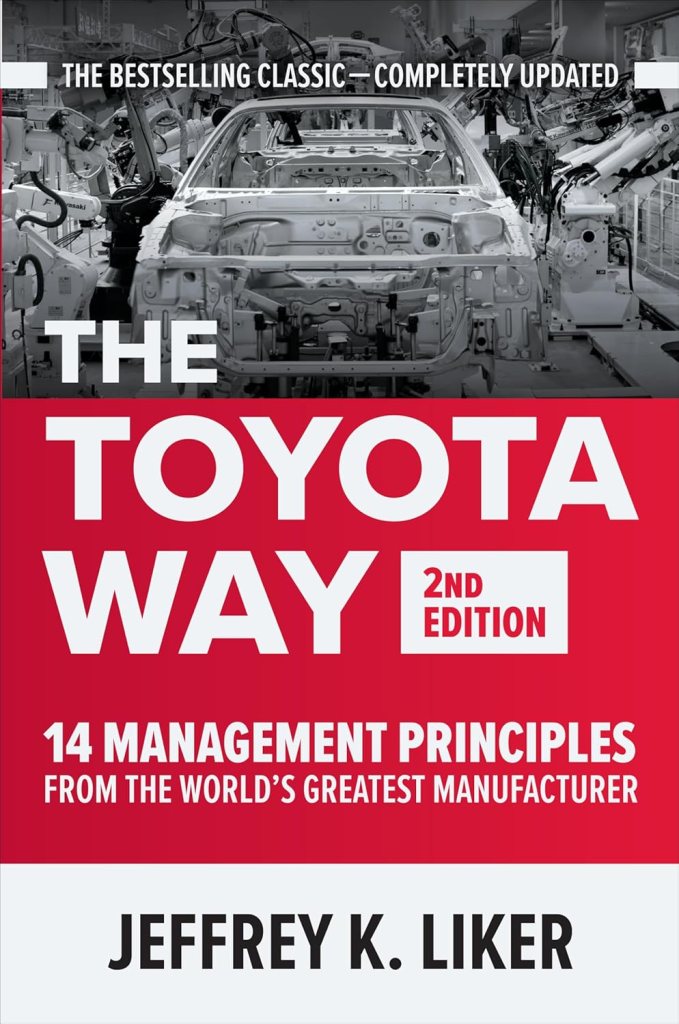
The Toyota Way, Second Edition: 14 Management Principles from the World’s Greatest Manufacturer by Jeffrey Liker
Synopsis:
How to speed up business processes, improve quality, and cut costs in any industry
In factories around the world, Toyota consistently makes the highest-quality cars with the fewest defects of any competing manufacturer, while using fewer man-hours, less on-hand inventory, and half the floor space of its competitors. The Toyota Way is the first book for a general audience that explains the management principles and business philosophy behind Toyota’s worldwide reputation for quality and reliability.
Complete with profiles of organizations that have successfully adopted Toyota’s principles, this book shows managers in every industry how to improve business processes by:
- Eliminating wasted time and resources
- Building quality into workplace systems
- Finding low-cost but reliable alternatives to expensive new technology
- Producing in small quantities
- Turning every employee into a quality control inspector
About the Author:
Dr. Jeffrey K. Likeris a professor of industrial and operations engineering at the University of Michigan and cofounder and director of the Japan Technology Management Program at the University of Michigan.
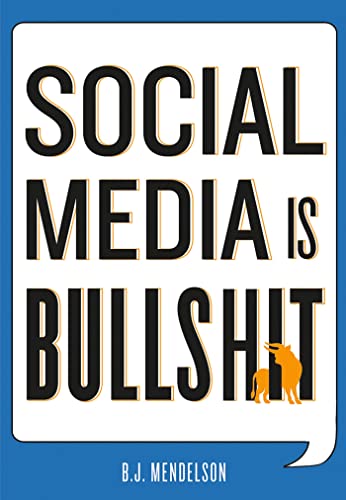
Social Media Is Bullshit by B.J. Mendelson
Synopsis:
A provocative look at social media that dispels the hype and tells you all you need to know about using the Web to expand your business
If you listen to the pundits, Internet gurus, marketing consultants, and even the mainstream media, you could think social media was the second coming. When it comes to business, they declare that it’s revolutionizing advertising, PR, customer relations―everything. And they all agree: it is here to stay.
In this lively, insightful guide, journalist and social critic B.J. Mendelson skillfully debunks the myths of social media. He illustrates how the notion of “social media” first came to prominence, why it has become such a powerful presence in the marketing field, and who stands to benefit each time it’s touted in the press. He shows you why all the Facebook friends and Twitter followers in the world mean nothing to you and your business without old-fashioned, real-world connections. He examines popular tales of social media “success,” and reveals some unsettling truths behind the surface. And he tells you how to best harness the potential of the Internet―without spending a fortune in the process.
Social media is bullshit. This book gives the knowledge and tools you really need to connect with customers and grow your brand.
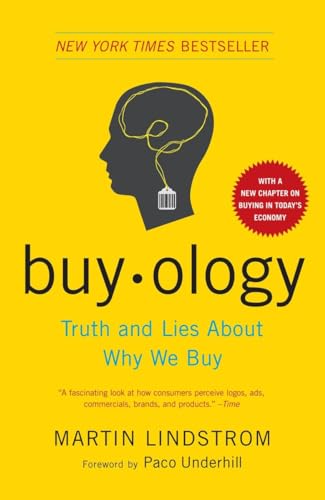
Buyology: Truth and Lies About Why We Buy by Martin Lindstrom
Synopsis:
How much do we know about why we buy? What truly influences our decisions in today’s message-cluttered world? An eye-grabbing advertisement, a catchy slogan, an infectious jingle? Or do our buying decisions take place below the surface, so deep within our subconscious minds, we’re barely aware of them?
In BUYOLOGY, Lindstrom, who was voted one of Time Magazine’s most influential people of 2009, presents the astonishing findings from his groundbreaking, three-year, seven-million-dollar neuromarketing study, a cutting-edge experiment that peered inside the brains of 2,000 volunteers from all around the world as they encountered various ads, logos, commercials, brands, and products. His startling results shatter much of what we have long believed about what seduces our interest and drives us to buy. Among the questions he explores:
Does sex actually sell? To what extent do people in skimpy clothing and suggestive poses persuade us to buy products?
Despite government bans, does subliminal advertising still surround us – from bars to highway billboards to supermarket shelves?
Can “Cool” brands, like iPods, trigger our mating instincts?
Can other senses – smell, touch, and sound – be so powerful as to physically arouse us when we see a product?
Do companies copy from the world of religion and create rituals – like drinking a Corona with a lime – to capture our hard-earned dollars?
Filled with entertaining inside stories about how we respond to such well-known brands as Marlboro, Nokia, Calvin Klein, Ford, and American Idol, BUYOLOGY is a fascinating and shocking journey into the mind of today’s consumer that will captivate anyone who’s been seduced – or turned off – by marketers’ relentless attempts to win our loyalty, our money, and our minds.
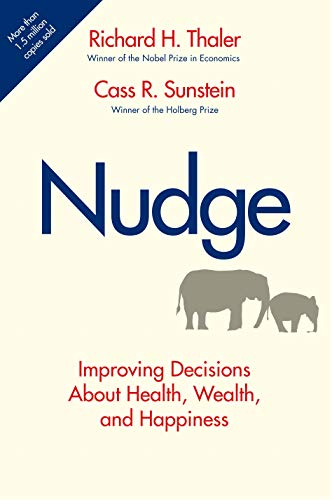
Nudge: Improving Decisions About Health, Wealth, and Happiness by Richard H. Thaler and Cass R. Sunstein
Synopsis:
Every day, we make decisions on topics ranging from personal investments to schools for our children to the meals we eat to the causes we champion. Unfortunately, we often choose poorly. Nobel laureate Richard Thaler and legal scholar and bestselling author Cass Sunstein explain in this important exploration of choice architecture that, being human, we all are susceptible to various biases that can lead us to blunder. Our mistakes make us poorer and less healthy; we often make bad decisions involving education, personal finance, health care, mortgages and credit cards, the family, and even the planet itself.
In Nudge, Thaler and Sunstein invite us to enter an alternative world, one that takes our humanness as a given. They show that by knowing how people think, we can design choice environments that make it easier for people to choose what is best for themselves, their families, and their society. Using colorful examples from the most important aspects of life, Thaler and Sunstein demonstrate how thoughtful “choice architecture” can be established to nudge us in beneficial directions without restricting freedom of choice. Nudge offers a unique new take—from neither the left nor the right—on many hot-button issues, for individuals and governments alike. This is one of the most engaging and provocative books to come along in many years.
Are you finding the tips helpful? Click the link to support the blog and keep helpful content coming your way.

 What's Trending Sage