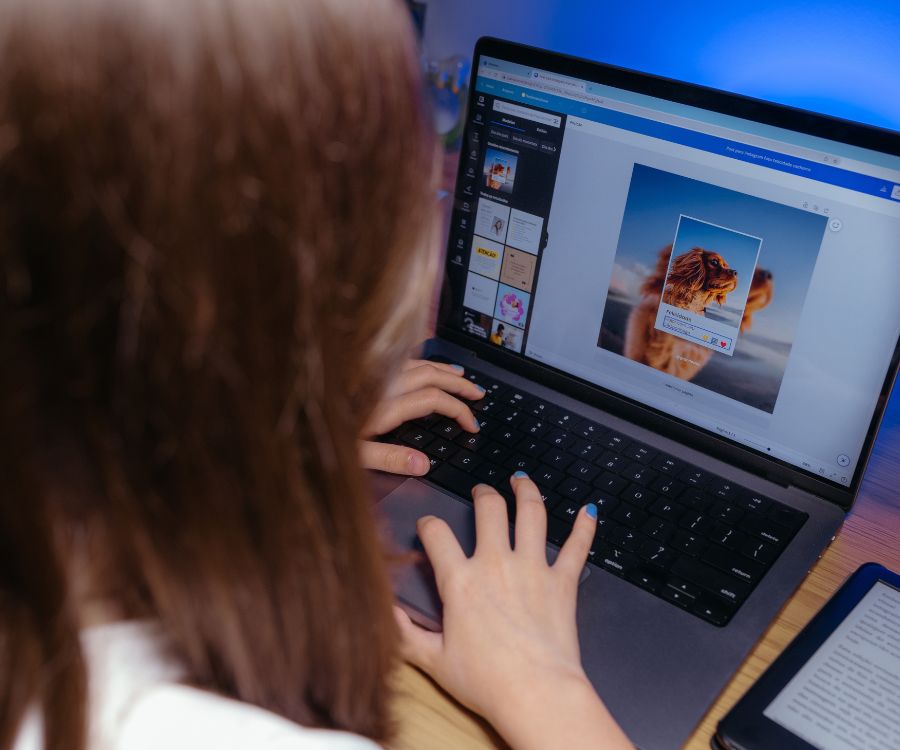
Should you build a WordPress website or use a website template builder?
At some point, you’ve probably asked yourself this question. I know that because it is one of the most common questions I receive from entrepreneurs who are just getting started. Fortunately, I’m in a unique position to answer it. Many years ago, before becoming a full-time entrepreneur, I worked as both a graphic designer and a website designer. I’ve seen this decision from both sides of the table.
More importantly, I’m answering this question as a business owner who isn’t trying to sell you anything. There is no hidden agenda, no expensive web design package waiting at the end of this article, and no affiliate commission attached to my recommendation. That distinction matters because there is a lot of misinformation floating around about websites, especially dealing with ownership.
Let’s start with a reality check.
You never truly “own” a website or domain name.
If you stop renewing your domain name, you lose it. If you stop paying for web hosting, your website goes offline. It doesn’t matter whether your website was custom-built on WordPress or created using a template builder. The website exists because multiple services are being paid for and maintained behind the scenes.
This is where many entrepreneurs get confused. We’ve been sold the idea that a custom website somehow provides complete ownership and control. In reality, websites are more like leasing space than owning land. Your domain registrar owns the registration system. Your hosting company owns the servers. Your payment processor controls your transactions. Even custom WordPress websites rely on third-party plugins, software, and service providers to function properly.
The truth is that every website operates within an ecosystem that you do not completely control.
Think about it this way. If you buy a house, you still pay property taxes, utilities, insurance, and maintenance. A website is no different. Whether you build it from scratch or use a website builder, there are ongoing costs and responsibilities involved. The difference is where those responsibilities fall and how much work you are willing to take on yourself.
The Misrepresentation of Website Ownership
Have you ever heard a business coach, influencer, content creator, or designer say something like, “You need to own your website, and building a WordPress website allows you to do that”?
For many entrepreneurs, statements like this create unnecessary anxiety. Suddenly, you feel like you’re making a mistake if you don’t invest thousands of dollars into a custom website. After all, we’ve been conditioned to believe that business ownership means owning everything connected to the business.
But before accepting that advice, ask yourself a simple question:
Why are they saying it?
Many people repeat business advice without understanding the context behind it. A business coach may have heard the recommendation from a designer. An influencer may be repeating something they heard at a conference. Someone else may simply be sharing what worked for them personally.
The problem is that what works for one entrepreneur isn’t automatically the right decision for another.
Unfortunately, the online business world often operates on trends rather than practical experience. One month, a particular platform is supposedly the worst thing ever. Six months later, the same people are promoting it as the greatest business tool on earth.
If you have some free time, go back and review older content from influencers and content creators. You’ll often find that their opinions change dramatically depending on what is popular at the moment. Most audiences have short memories, and many content creators know this.
It doesn’t mean all influencers are dishonest. It simply means their incentives may be different from yours. Their goal is often to generate content, views, engagement, sponsorships, or affiliate commissions. Your goal is to build a profitable, sustainable business.
That is why I encourage entrepreneurs to spend less time listening to internet gurus and more time talking to actual business owners. Speak with people who are actively running businesses, managing employees, paying vendors, solving customer problems, and making payroll. Real-world business experience often provides much more valuable insight than social media trends.
What Designers Don’t Always Tell You
Now let’s talk about designers.
As someone who spent years working as both a graphic designer and website designer, I can tell you that not every recommendation is made with your best interests in mind.
Some designers genuinely care about helping clients make smart decisions. Others are simply trying to maximize the value of a project.
Over the years, I have helped many entrepreneurs review website proposals. Together, we identified the features they truly needed versus the features that were simply nice to have.
Almost every time, the entrepreneur would return to the designer with a smaller scope of work and a lower budget. What always surprised them was how quickly the designer became willing to negotiate after initially insisting that every feature was necessary.
Why?
Because more features mean a larger project. A larger project means more billable hours. More billable hours mean more money.
Custom websites filled with advanced plugins, animations, integrations, and unnecessary features often benefit the designer more than the business owner.
In many cases, they win, and you lose.
What Really Matters: Money
At the end of the day, this decision comes down to one thing: Money.
Not status. Not ownership. Not bragging rights.
Money.
One of my favorite sayings is, “You can’t squeeze water from a rock.”
It’s a simple reminder that you cannot expect something to produce results when it lacks the resources necessary to do so.
A custom WordPress website costs more money upfront. That’s simply the reality.
Before committing to one, ask yourself some important questions.
Can you comfortably afford the investment?
How quickly do you need to launch?
Do you already have your branding, messaging, photography, content, and business systems in place?
Custom websites require planning, strategy, revisions, testing, and patience. A quality custom website is not something that magically appears overnight. Depending on the complexity, the process can take weeks or even months.
Then there is the ongoing maintenance.
Do you have access to a web developer if something breaks?
Do you have emergency funds available if your website goes down?
Can you afford to pay someone to troubleshoot security issues, plugin conflicts, performance problems, or software updates?
Do you have at least $5,000 reserved for unexpected website issues?
Most don’t.
Without a dedicated developer, finding someone during an emergency can cost significantly more than standard rates. Meanwhile, your website may be offline, customers may be unable to place orders, and sales may be lost.
Why Website Builders Are So Popular
This is why platforms like Wix, Shopify, Squarespace, and other website builders have become so popular.
They offer a more financially practical solution.
Website builders allow you to launch quickly with a much smaller upfront investment. Instead of spending thousands of dollars immediately, you pay a monthly subscription fee that includes hosting, security, software updates, and customer support.
Most website builders also provide professionally designed templates that can be customized to fit your brand.
For business owners who need to get online quickly, these platforms can be a practical and affordable solution.
WordPress: Pros and Cons
WordPress offers incredible flexibility and customization. It allows businesses to create highly branded websites tailored to specific needs and customer experiences. As your company grows, your website can grow with it.
I often compare WordPress to building a custom home. You can add rooms, remodel sections, build additions, and make changes whenever your needs evolve.
WordPress is also highly SEO-friendly, with thousands of plugins and tools available to improve search visibility, performance, and functionality. It offers greater control over design, content structure, integrations, and user experience than most website builders.
However, WordPress comes with a learning curve. Beginners often find the platform overwhelming due to the many options, settings, plugins, and technical considerations.
Security is another concern. Because WordPress powers such a large portion of the internet, it is a frequent target of hackers and malicious attacks.
Maintenance is also ongoing. Themes, plugins, and software updates require regular attention. If neglected, websites can become vulnerable, slow, or unstable.
And perhaps most importantly, WordPress often requires outside expertise when things go wrong.
Website Builders: Pros and Cons
Website builders shine when it comes to simplicity.
They are designed for entrepreneurs with little technical experience who want to focus on running their businesses rather than managing websites.
Most platforms include hosting, security updates, analytics, SEO tools, customer support, and e-commerce functionality in one package.
The design process is significantly faster because you start with an existing template instead of building everything from scratch.
Website builders are often ideal for startups, side businesses, service providers, and entrepreneurs operating on tighter budgets.
The downside is that flexibility can be limited.
Unlike WordPress, you can’t easily keep adding major structural changes as your business evolves. I often compare website builders to purchasing a townhouse. You can paint the walls and update the furniture, but you can’t simply build an entirely new wing onto the structure whenever you feel like it.
Switching templates later can also be difficult and may require rebuilding significant portions of the website.
Additionally, monthly subscription costs continue indefinitely, and some platforms restrict advanced customizations or integrations.
What It Really Comes Down To
Don’t let anyone convince you that one option is automatically better than the other.
The right choice depends entirely on your goals, budget, timeline, and current stage of business.
Before buying into all the website ownership hype, take a realistic look at your situation. I’ve worked with entrepreneurs who had absolutely no business spending $5,000 or more on a custom WordPress website. Yet they did it because someone convinced them that having a custom website would somehow make their business more successful.
Meanwhile, they didn’t have money for inventory, equipment, supplies, ingredients, operations, marketing, advertising, or customer acquisition.
All they had was a beautiful website.
And while a beautiful website is nice, it doesn’t build a successful business on its own.
Customers still need to find you. You still need marketing. You still need sales. You still need operations. You still need cash flow.
A website is a tool. It is not a magic solution for automatic success.
Choose the option that supports your business today while giving you room to grow tomorrow. Sometimes that means investing in a custom WordPress website. Other times, it means launching quickly with a website builder and focusing your money where it matters most.
The smartest business decision isn’t the one that sounds the most impressive. It’s the one that helps your business survive, grow, and remain profitable.
Choosing the right website platform can save you time, money, and frustration down the road. Before you invest in a website, download this free WordPress vs. Website Builder Checklist to evaluate your budget, technical skills, business goals, and future growth plans. In just a few minutes, you’ll have a clearer understanding of which option best fits your business and where to focus your resources.
Are you finding the tips helpful? Click the link to support the blog and keep helpful content coming your way.

 What's Trending Sage